
- HOME
- EARTHMATE®
- NEWS & BLOG
- PRODUCTS
- ASPHALTRAC® Asphalt Reinforcing & Rehabilitation
- BASALFAB® Woven Geotextile & Silt Fence
- BASEGRID® Bi-axial Geogrid
- HEXAGRID® Tri-axial Geogrid
- EASYGRID® Composite Geogrid
- VIGORTEX® Nonwoven Geotextile & Geocomposite
- ENVIROMATE® Smooth & Textured Geomembrane
- PRODEWATERING® Geo Tube & Geobag
- WALLSTRAIN® Retaining Wall System
- AGRITEX® Weed Mat & Tree Root Protection
- ENVIROMAT® Turf Reinforcement Mats (TRMs)
- CAPENET® Drainage Geonet & Geocomposite
- TERRAWEB® Geocell
- MINETRAC® Mining Reinforcing Grid
- BENTOSEAL® GCLs
- APPLICATIONS
- SERVICES
- CONTACT
- Español

Geosynthetics for Asphalt Paving, Reinforcing and Rehabilitation
Introduction: The Challenge of Pavement Deterioration
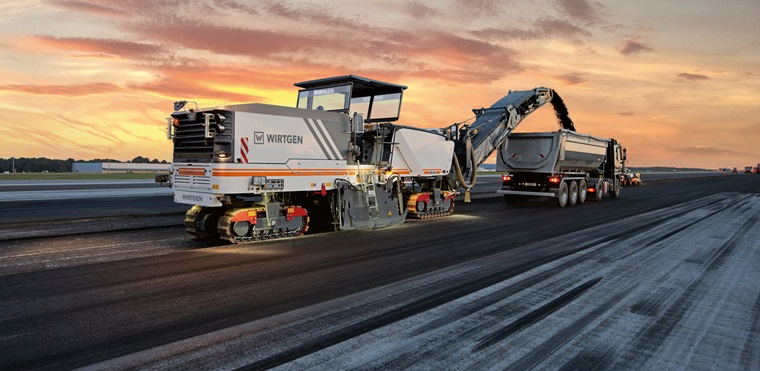
Every day, millions of vehicles travel over asphalt pavements that are subjected to relentless forces: heavy truck loads, temperature fluctuations, moisture intrusion, and the constant expansion and contraction of the pavement structure. Over time, these forces take their toll. Cracks form, ruts develop, and the pavement begins to fail.
The conventional solution has been to apply thicker asphalt overlays. But this approach has a fundamental flaw: a new overlay does not make the old cracks disappear—they remain in the underlying layers and quickly propagate upward into the fresh asphalt. This phenomenon, known as reflective cracking, is one of the major problems associated with asphaltic overlays. In fact, the lifespan of an asphalt overlay decreases markedly if the old pavement being rehabilitated is subjected to intense cracking.
This is where geosynthetics enter the picture—offering a proven, cost-effective, and sustainable solution to extend pavement life, reduce maintenance costs, and create stronger, more resilient roads.
What Are Geosynthetics in Asphalt Pavement?
Geosynthetics are planar products manufactured from polymeric materials, used to improve the performance of asphalt pavements during both initial construction and rehabilitation. When placed as interlayers between existing pavement and new asphalt overlays—or within the pavement structure itself—they serve multiple critical functions.
The UNE-EN 15381 standard identifies three primary functions that geosynthetics can fulfil in pavement rehabilitation: reinforcement (R) , interlayer barrier (B) , and stress relaxation (STR) . Together, these functions address the three main threats to pavement longevity: cracking, moisture damage, and structural fatigue.
The Three Core Functions of Geosynthetic Interlayers
1. Reinforcement – Strengthening the Pavement from Within
When used for reinforcement, geosynthetics add a tensile element at the base of an asphalt overlay. This creates a composite material that combines the compressive strength of the asphalt mix with the tensile strength of the geosynthetic.
The reinforcement effect is primarily achieved through lateral confinement—the geosynthetic restricts horizontal movement within the asphalt layer, reducing tensile strains that would otherwise lead to cracking. Research has demonstrated that the presence of geosynthetics within asphaltic layers can help reduce the magnitude of elastic and plastic asphalt strains, pavement stresses, and surface deflections.
The results are striking:
- Geogrid reinforcement has been shown to improve fatigue life by factors reaching up to 2.5 to 10 times that of unreinforced specimens.
- One study found that geosynthetic interlayers increased fatigue life by approximately 13-fold compared to unreinforced asphalt layers.
- The inclusion of geogrid greatly improves the fatigue life of asphalt pavement, with stronger geogrids providing greater improvements.
2. Reflective Crack Mitigation – Stopping Cracks Before They Reach the Surface
Reflective cracking occurs when cracks in an existing pavement propagate upward through a new asphalt overlay. This is the most frequent mechanism of failure in rehabilitated pavements.
Geosynthetics address this problem through two primary mechanisms:
Crack interception and redirection – With a stiff tensile element at the bottom of an overlay, cracks propagating toward the surface are intercepted and prevented from migrating further. Cracks are redirected and dissipated horizontally. Geosynthetic interlayers have proven effective in delaying reflective cracking by redirecting crack propagation horizontally and dissipating energy.
Stress relief – Nonwoven paving geotextiles, typically bitumen-impregnated, are placed at the interface between existing and new asphalt layers to absorb and distribute stresses. The stress relief mechanism involves a low-stiffness material that accommodates movement without transferring stresses to the overlay.
The effectiveness is well-documented:
- Geosynthetics as asphalt reinforcement have consistently shown outstanding results in addressing crack initiation and propagation.
- The inclusion of geogrid reinforcement has been shown to effectively eliminate reflection cracking in overlays.
3. Moisture Barrier – Protecting Against the Silent Destroyer
Water is one of the most destructive forces affecting pavement performance. When moisture infiltrates the pavement structure, it can lead to stripping, loss of bond between layers, weakening of the subgrade, and accelerated deterioration.
Geosynthetic interlayers create an effective moisture barrier that limits water infiltration into the pavement structure. Preventing water ingress into the lower layers is critical to preserve the integrity and long-term performance of the pavement section. Geocomposites that combine reinforcement grids with nonwoven fabrics provide both structural reinforcement and an efficient moisture barrier.
Main Types of Geosynthetics for Asphalt Applications
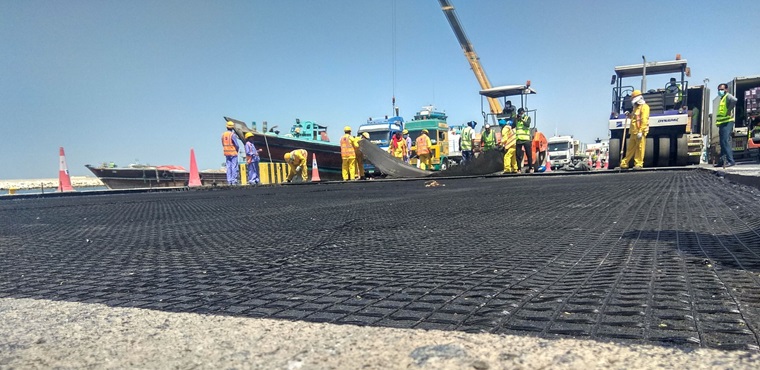
Paving Geogrids
Geogrids are open-structure products with a high modulus—meaning they offer high tensile strength at low elongation. The grid provides a high tensile strength element within the asphalt, creating a composite layer. The idea is to mobilize the tensile strength characteristics of the geogrid with only limited deformation of the pavement.
Fiberglass geogrids are particularly effective for asphalt reinforcement. They are made from high-strength, low-elongation glass fibers that provide excellent performance at high temperatures. Laboratory tests have shown that with fiberglass geogrid reinforcement, the flexural strength of asphalt increases by 24.82% , deformation is significantly reduced, and rutting depth decreases by 7.41% .
Polyester geogrids are another popular choice. High-tenacity polyester is often selected because of the high compatibility of its mechanical behavior with the modulus of asphalt and its good performance under dynamic loads. Polyester asphalt reinforcement has demonstrated significant environmental benefits, achieving 63% savings in embodied CO₂ per year of design life compared to unreinforced overlays.
Carbon fiber geogrids represent an emerging technology, showing superior performance compared to carbon/glass fiber alternatives in interlayer shear strength tests.
Paving Geotextiles (Paving Fabrics)
Paving nonwoven geotextiles are needle-punched fabrics that provide stress relief and interlayer barrier functions. They are typically impregnated with bitumen and placed at the interface between old and new pavement layers.
These fabrics enhance performance through two mechanisms: stress relief and waterproofing. They have proven most beneficial when used with asphalt overlays at least 38 mm thick, over pavement with competent subgrade support.
Paving Geocomposites
Geocomposites combine multiple functions in a single product. A typical paving geocomposite consists of a geogrid bonded to a fabric—together they provide reinforcement and act as a Stress Absorbing Membrane Interlayer (SAMI) and a moisture barrier.
Polymeric geocomposite interlayers typically comprise a high-tenacity polyester grid with a lightweight nonwoven fabric, impregnated with a bituminous coating. These products have been successfully used in major highway rehabilitation projects, allowing for reduced overlay thickness while maintaining or improving performance.
Paving Mats
Paving mats are composite structures that combine reinforcement with drainage and barrier functions. The matrix structure allows asphalt binder to fully penetrate and fill voids within the mat, limiting moisture infiltration while providing tensile reinforcement.
How Geosynthetics Work: The Mechanisms
Fatigue Life Enhancement
One of the most significant benefits of geosynthetic reinforcement is the extension of fatigue life. Geosynthetics can increase the fatigue life of the asphalt layer by reducing tensile strain. Research findings show that the use of geogrids improves fatigue life significantly.
The reinforcement is particularly valuable in thin pavements, where fatigue cracking initiates at the bottom of the asphalt layer where tensile strain and stress are highest, then propagates to the surface. By placing reinforcement at this critical location, cracks are intercepted before they can reach the surface.
Rutting Reduction
Geogrid reinforcement can reduce the permanent strains that result in surface rutting. The confinement provided by the geosynthetic restricts lateral movement of the asphalt mix under traffic loading, maintaining the pavement's shape and ride quality.
Subgrade Protection
Geogrids embedded in the asphalt layer have been demonstrated to reduce the pressure at the subgrade caused by paving equipment by 70% compared with control sections, while simultaneously reducing longitudinal and transverse strain at the bottom of the asphalt layer by 54% and 99%, respectively. This protection extends beyond construction to the entire service life of the pavement.
Load Distribution and Stress Transfer
The open grid structure of geogrids promotes through-hole bonding and more efficient stress transfer to the grid by both the overlying and underlying aggregate matrices of the asphalt layers. This creates a unified composite structure that distributes loads more effectively.
Real-World Applications: Proven Performance
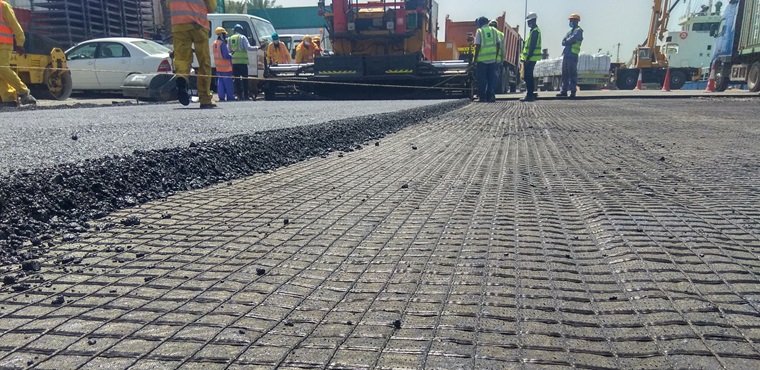
Highway Rehabilitation
The Texas Department of Transportation (TxDOT) has successfully used geosynthetic-reinforced asphalt overlays on multiple sections of State Highway 21. The rehabilitation involved a polymeric geocomposite interlayer with a reduced asphalt overlay thickness of 75 mm (3 inches) instead of the conventional 125 mm (5 inches) —demonstrating that geosynthetics allow for thinner, more economical overlays without sacrificing performance.
Airport Pavements
Geosynthetic reinforcement has been successfully applied in airfield pavements, where the demands of heavy aircraft loads require exceptional durability. Experimental field tracks constructed at Salvador International Airport in Brazil featured five different geosynthetic-reinforced asphalt test sections, all of which proved to be "millable" and suitable for future rehabilitation.
Reflective Crack Control
Extensive research has confirmed that geosynthetic interlayers are one of the most effective ways to prevent reflective cracking in asphalt overlays. Studies using four-point bending tests combined with Digital Image Correlation have clearly shown that paving geosynthetics significantly delay crack propagation, with reinforced beams enduring more cycles than control beams.
Sustainability and Economic Benefits
The adoption of geosynthetics in asphalt paving and rehabilitation delivers compelling environmental and economic advantages:
Water is one of the most destructive forces affecting pavement performance. When moisture infiltrates the pavement structure, it can lead to stripping, loss of bond between layers, weakening of the subgrade, and accelerated deterioration.
Geosynthetic interlayers create an effective moisture barrier that limits water infiltration into the pavement structure. Preventing water ingress into the lower layers is critical to preserve the integrity and long-term performance of the pavement section. Geocomposites that combine reinforcement grids with nonwoven fabrics provide both structural reinforcement and an efficient moisture barrier.
Main Types of Geosynthetics for Asphalt Applications
Paving Geogrids
Geogrids are open-structure products with a high modulus—meaning they offer high tensile strength at low elongation. The grid provides a high tensile strength element within the asphalt, creating a composite layer. The idea is to mobilize the tensile strength characteristics of the geogrid with only limited deformation of the pavement.
Fiberglass geogrids are particularly effective for asphalt reinforcement. They are made from high-strength, low-elongation glass fibers that provide excellent performance at high temperatures. Laboratory tests have shown that with fiberglass geogrid reinforcement, the flexural strength of asphalt increases by 24.82% , deformation is significantly reduced, and rutting depth decreases by 7.41% .
Polyester geogrids are another popular choice. High-tenacity polyester is often selected because of the high compatibility of its mechanical behavior with the modulus of asphalt and its good performance under dynamic loads. Polyester asphalt reinforcement has demonstrated significant environmental benefits, achieving 63% savings in embodied CO₂ per year of design life compared to unreinforced overlays.
Carbon fiber geogrids represent an emerging technology, showing superior performance compared to carbon/glass fiber alternatives in interlayer shear strength tests.
Paving Geotextiles (Paving Fabrics)
Paving nonwoven geotextiles are needle-punched fabrics that provide stress relief and interlayer barrier functions. They are typically impregnated with bitumen and placed at the interface between old and new pavement layers.
These fabrics enhance performance through two mechanisms: stress relief and waterproofing. They have proven most beneficial when used with asphalt overlays at least 38 mm thick, over pavement with competent subgrade support.
Paving Geocomposites
Geocomposites combine multiple functions in a single product. A typical paving geocomposite consists of a geogrid bonded to a fabric—together they provide reinforcement and act as a Stress Absorbing Membrane Interlayer (SAMI) and a moisture barrier.
Polymeric geocomposite interlayers typically comprise a high-tenacity polyester grid with a lightweight nonwoven fabric, impregnated with a bituminous coating. These products have been successfully used in major highway rehabilitation projects, allowing for reduced overlay thickness while maintaining or improving performance.
Paving Mats
Paving mats are composite structures that combine reinforcement with drainage and barrier functions. The matrix structure allows asphalt binder to fully penetrate and fill voids within the mat, limiting moisture infiltration while providing tensile reinforcement.
How Geosynthetics Work: The Mechanisms
Fatigue Life Enhancement
One of the most significant benefits of geosynthetic reinforcement is the extension of fatigue life. Geosynthetics can increase the fatigue life of the asphalt layer by reducing tensile strain. Research findings show that the use of geogrids improves fatigue life significantly.
The reinforcement is particularly valuable in thin pavements, where fatigue cracking initiates at the bottom of the asphalt layer where tensile strain and stress are highest, then propagates to the surface. By placing reinforcement at this critical location, cracks are intercepted before they can reach the surface.
Rutting Reduction
Geogrid reinforcement can reduce the permanent strains that result in surface rutting. The confinement provided by the geosynthetic restricts lateral movement of the asphalt mix under traffic loading, maintaining the pavement's shape and ride quality.
Subgrade Protection
Geogrids embedded in the asphalt layer have been demonstrated to reduce the pressure at the subgrade caused by paving equipment by 70% compared with control sections, while simultaneously reducing longitudinal and transverse strain at the bottom of the asphalt layer by 54% and 99%, respectively. This protection extends beyond construction to the entire service life of the pavement.
Load Distribution and Stress Transfer
The open grid structure of geogrids promotes through-hole bonding and more efficient stress transfer to the grid by both the overlying and underlying aggregate matrices of the asphalt layers. This creates a unified composite structure that distributes loads more effectively.
Real-World Applications: Proven Performance
Highway Rehabilitation
The Texas Department of Transportation (TxDOT) has successfully used geosynthetic-reinforced asphalt overlays on multiple sections of State Highway 21. The rehabilitation involved a polymeric geocomposite interlayer with a reduced asphalt overlay thickness of 75 mm (3 inches) instead of the conventional 125 mm (5 inches) —demonstrating that geosynthetics allow for thinner, more economical overlays without sacrificing performance.
Airport Pavements
Geosynthetic reinforcement has been successfully applied in airfield pavements, where the demands of heavy aircraft loads require exceptional durability. Experimental field tracks constructed at Salvador International Airport in Brazil featured five different geosynthetic-reinforced asphalt test sections, all of which proved to be "millable" and suitable for future rehabilitation.
Reflective Crack Control
Extensive research has confirmed that geosynthetic interlayers are one of the most effective ways to prevent reflective cracking in asphalt overlays. Studies using four-point bending tests combined with Digital Image Correlation have clearly shown that paving geosynthetics significantly delay crack propagation, with reinforced beams enduring more cycles than control beams.
Sustainability and Economic Benefits
The adoption of geosynthetics in asphalt paving and rehabilitation delivers compelling environmental and economic advantages:
- Extended Pavement Life – Geosynthetic reinforcement can extend pavement life by up to 300% , dramatically reducing the frequency of costly rehabilitation projects.
- Reduced Material Usage – By allowing thinner overlays, geosynthetics conserve valuable aggregates and asphalt binders. The Texas SH21 project reduced overlay thickness by 40% (from 125 mm to 75 mm) while maintaining performance.
- Lower Carbon Footprint – Polyester asphalt reinforcement achieves 63% savings in embodied CO₂ per year of design life compared to unreinforced overlays. This substantial saving is achieved by extending pavement life and reducing the need for maintenance.
- Cost Savings – Significant cost savings per year of design life are achieved alongside environmental benefits—demonstrating that saving the environment and saving costs go very well hand in hand.
- Reduced Traffic Disruption – The increased pavement life achieved through geosynthetic reinforcement prevents excessive disruption to traffic flow and local business.
Conclusion: Building Better Roads for Tomorrow
Geosynthetics have transformed the way we build, reinforce, and rehabilitate asphalt pavements. From the initial construction of roads over weak subgrades to the restoration of severely distressed pavements, these engineered materials provide the hidden strength that keeps our roads performing longer and better.
By addressing the three critical threats to pavement longevity—reflective cracking, structural fatigue, and moisture damage—geosynthetics offer a proven, sustainable, and cost-effective solution. Whether through the high tensile strength of geogrids, the stress-relieving properties of paving fabrics, or the multifunctional performance of geocomposites, these materials are extending the life of pavements around the world.
As infrastructure demands grow and sustainability becomes increasingly important, geosynthetics will play an ever more vital role in creating the resilient, long-lasting, and environmentally responsible roads of the future. The hidden strength beneath our roads is no longer hidden—it's geosynthetics.
- ABOUT US
-
Earthmate® is a leader in the geosynthetics industry for providing innovative and cost-effective solutions to support the unique challenges of civil engineering, environmental and geotechnical projects across a variety of sectors including: road construction, water and waste management, mining, oil & gas, retaining wall, containment and agriculture.
- QUICK MENUE
- HOME
- EARTHMATE®
- NEWS & BLOG
- PRODUCTS
- APPLICATIONS
- SERVICES
- CONTACT
- Español
- MEMBERSHIP
